By: Abdul Hayi Moomen (Director of Public Affairs, UDS)
"The measure of a university is not merely the number of graduates it produces, but the quality of the solutions those graduates bring to society."
In every generation, societies are confronted with questions that classrooms alone cannot answer. How do we eradicate poverty? How do we improve education in deprived communities? How do we encourage citizens to embrace healthy lifestyles? How do we resolve conflicts peacefully? How do we protect the environment while pursuing economic growth? How do we ensure that no community is left behind in national development?
These are not merely academic questions. They are national questions. The answers require graduates who are capable of thinking critically, communicating effectively, mobilising communities, analysing evidence and designing practical interventions. They require graduates whose education extends beyond lecture theatres into the lived realities of ordinary people.
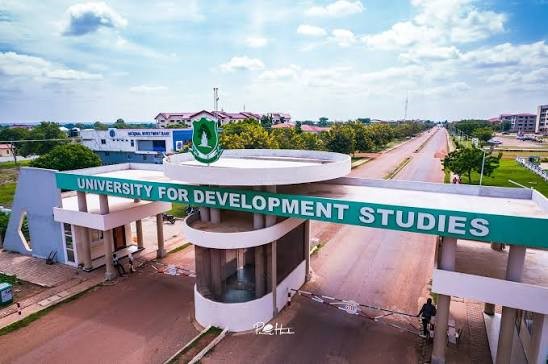
It is precisely this philosophy that inspired the establishment of the University for Development Studies (UDS) in 1992.
As Ghana's first public university established with an explicit development mandate, UDS was founded to blend the academic world with the world of society. Unlike the traditional university model that focuses predominantly on classroom teaching, UDS was created to ensure that teaching, research and community engagement directly contribute to solving societal challenges, particularly in underserved communities. This enduring philosophy is aptly captured in the university's motto, "knowledge for service."
Among the many programmes that give practical expression to this philosophy, few exemplify it more profoundly than the Bachelor of Arts in Sustainable Development Studies.
Sustainable Development Studies is often misunderstood. Some perceive it simply as another humanities programme. Others mistakenly believe it prepares graduates exclusively for teaching. Such perceptions fail to appreciate the interdisciplinary depth and national relevance of the programme.
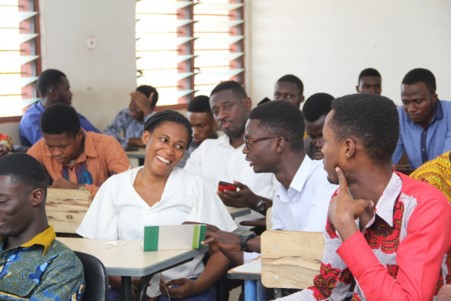
Sustainable Development Studies is fundamentally about understanding people before attempting to develop societies. It equips students with the intellectual tools to understand why communities develop differently, why well-funded projects sometimes fail, how public attitudes influence national progress, and how citizens can become active partners rather than passive beneficiaries of development.
The programme prepares graduates to become facilitators of change and professionals who are capable of empowering individuals, strengthening institutions and supporting sustainable development through education, communication, advocacy and community participation.
A curriculum that speaks to Ghana's Development Priorities
The strength of the development Studies programme lies in the practical relevance of its curriculum.
Students undertake courses in development communication, adult and non-formal education, community development, project planning and management, participatory development, research methods, monitoring and evaluation, governance, leadership, gender studies, environmental sustainability, development policy and community mobilisation, among others. Every one of these courses addresses an area that remains central to Ghana's development agenda.
Development Communication equips graduates with the ability to design public education campaigns, communicate scientific information in understandable language, combat misinformation and promote positive behavioural change.
Community Development teaches students how to work respectfully with local communities, recognising that sustainable development is achieved not by imposing solutions but by empowering people to identify and solve their own challenges.
Project Planning and Management develops competencies required to conceptualise, implement, supervise and evaluate development interventions efficiently and responsibly.
Research Methods train students to generate reliable evidence for policy formulation, ensuring that development decisions are informed by facts rather than assumptions.
Governance and Leadership nurture ethical leadership, accountability, transparency and citizen participation which are all indispensable ingredients of democratic development.
Gender and Social Inclusion prepare graduates to design interventions that recognise the needs of women, children, persons with disabilities and other vulnerable populations, ensuring that development leaves no one behind.
Environmental sustainability encourages responsible stewardship of natural resources at a time when climate change, deforestation and environmental degradation increasingly threaten livelihoods.
Viewed collectively, these courses are not isolated academic subjects. They constitute an integrated framework for understanding and addressing Ghana's most pressing development challenges.
University education must produce thinkers, not merely job seekers
One of the greatest misconceptions about higher education is the expectation that every degree should correspond directly to a single profession. Such an expectation misunderstands the purpose of a university.
The primary responsibility of Bachelor's Education is not merely vocational training. Its foremost responsibility is intellectual formation.
Universities are expected to cultivate analytical minds, ethical judgement, creativity, curiosity, adaptability and problem-solving abilities. They prepare graduates not simply for today's occupations but for tomorrow's uncertainties.
Many of the careers that exist today did not exist two decades ago. Likewise, many of the challenges future generations will confront have not yet emerged.
Graduates therefore require more than technical competence. They require intellectual flexibility. Development Studies provides precisely that foundation.
It teaches students how to analyse complex social systems, understand human behaviour, synthesise knowledge from multiple disciplines and design practical responses to multifaceted problems.
These are competencies that remain valuable regardless of technological change or labour market fluctuations.
Learning by living with communities
Perhaps no aspect of UDS distinguishes it more than its internationally recognised Third Trimester Field Practical Programme (TTFPP).
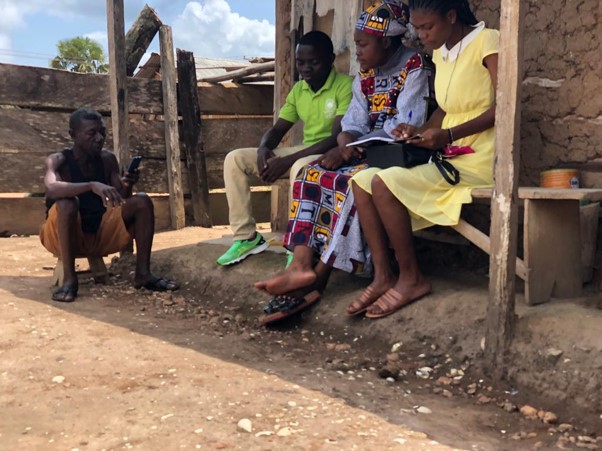
Rather than confining learning to lecture halls, UDS requires students to spend extended periods living and working in communities where they experience development challenges firsthand.
Students engage with farmers, women, youth, traditional authorities, schools, health workers and community leaders. They conduct participatory research, identify local challenges and contribute to practical interventions.
For development Studies students, this experience is transformational. They graduate having learned not only from textbooks but from the wisdom, resilience and aspirations of communities themselves. The classroom introduces concepts. The community teaches reality.
This integration of theory and practice remains one of the defining characteristics of UDS and has attracted international recognition as an innovative model of higher education.
Quiet Contributors to National Development
The impact of the development Studies programme is perhaps best appreciated through its alumni.
Across Dhana, graduates of the programme are serving in Ministries, Departments and Agencies, Metropolitan, Municipal and District Assemblies, educational institutions, development authorities, civil society organisations, international NGOs, donor-funded projects and community-based organisations.
Many coordinate development projects, facilitate community engagement, manage advocacy campaigns, conduct research, oversee monitoring and evaluation systems, support policy implementation and strengthen institutional capacity.
Others have become educators, journalists, entrepreneurs, consultants and researchers whose work continues to shape national discourse and influence public policy.
Although they may not always occupy the front pages of newspapers, their contributions are reflected in stronger communities, better-informed citizens, improved public services and more sustainable development outcomes. They represent the often-unseen professionals working quietly behind Ghana's development successes.
A Programme Whose Time Has Come
As Ghana pursues the Sustainable Development Goals (SDGs), strengthens local governance, expands decentralisation and confronts increasingly complex socio-economic challenges, the country needs graduates who understand both people and policy, both theory and practice, both institutions and communities.
Development education provides exactly this combination. Its relevance extends far beyond the classroom because development itself extends far beyond infrastructure.
Roads can be constructed, hospitals can be equipped and schools can be built. But without informed citizens, capable institutions and empowered communities, sustainable development remains elusive.
That is why programmes such as development Studies deserve greater public appreciation.
They produce graduates whose greatest qualification is not simply what they know, but what they are able to help society become.
As the University for Development Studies (UDS) continues to fulfil its mission of using knowledge for service, the Development Studies programme stands as one of its finest expressions, a programme that does not merely award degrees but develops minds, empowers communities and nurtures leaders committed to transforming Ghana, one community at a time.
View your student profile, register your courses, etc.
Access learning material on the University's e-Learning platform
Access the University library's resources
Search for and view staff profile