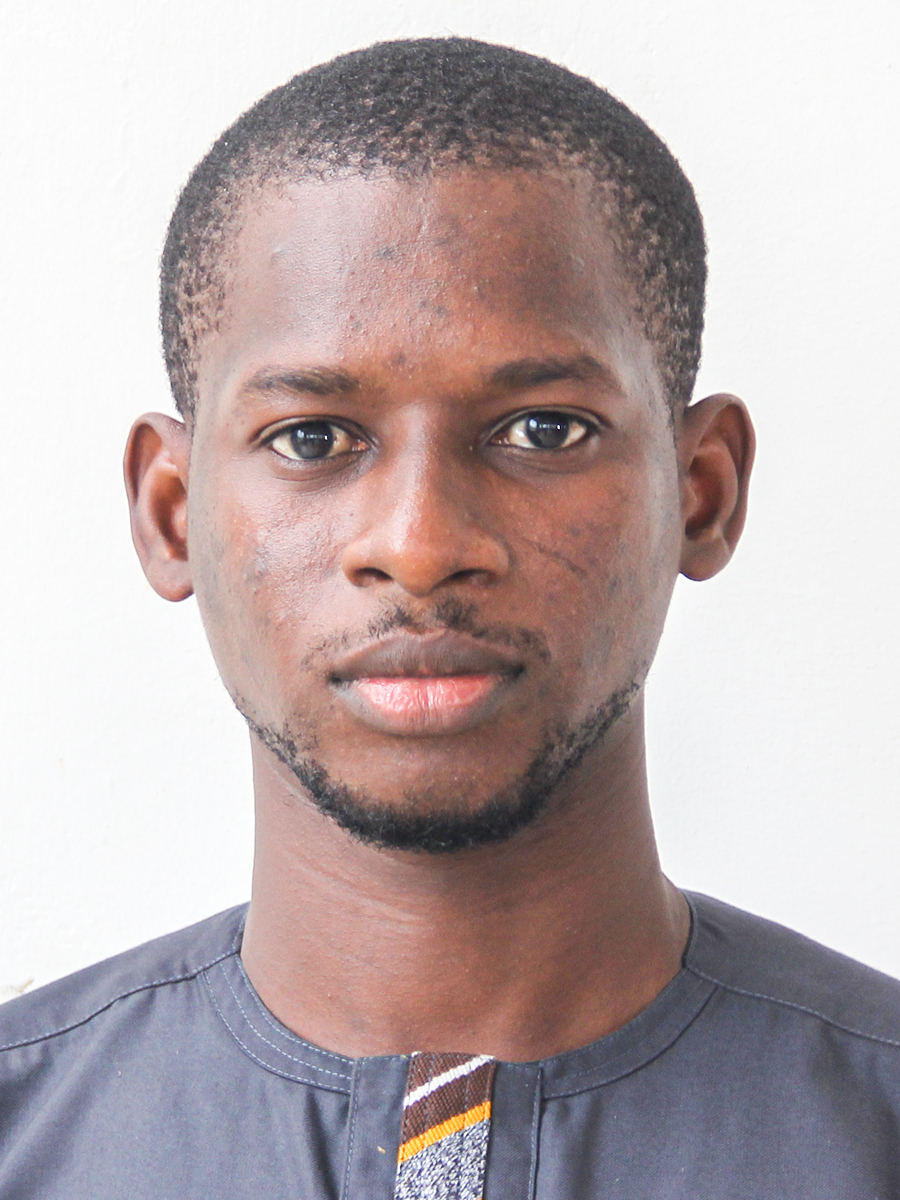
DR. ABUDU BALLU DUWIEJUAHLECTURERDEPARTMENT OF BIOTECHNOLOGY AND MOLECULAR BIOLOGYFACULTY OF BIOSCIENCENYANKPALA Campus
Background
Abudu Ballu Duwiejuah, Ph.D is a Lecturer at the Department of Biotechnology and Molecular Biology at the University for Development Studies (UDS), Tamale, Ghana. He holds a BSc in Renewable Natural Resources, an MPhil, and a PhD in Biotechnology from UDS, along with a Postgraduate Diploma in Education from the University of Education, Winneba, Ghana. Dr. Duwiejuah serves as the Departmental Quality Assurance Officer and specialises in Environmental Biotechnology. With 7 years of experience in teaching and research at UDS, he supervises both undergraduate and postgraduate research. His teaching portfolio includes courses on Environmental Biotechnology, Phytoremediation, Myco and Microbial Remediation, Biodiversity Conservation, Seminar, Statistics and Research Methods, Environmental Sustainability, Climate Change Biology, and Environmental Impact Assessment.
His research interests span various areas such as environmental remediation, biochar production, ecological sustainability, adsorption, health risk assessment, bioremediation, and pollution monitoring using bioindicators. He has co-authored over 60 articles in peer-reviewed journals, book chapters, and conference proceedings. He has participated in international and local conferences. He has been involved in consultancy services for projects like the responsive adolescent health interventions study in Tamale for the Regional Institute of Population Studies, University of Ghana, Legon. Recently, he collaborated on a grant-winning project with T.NUA Collective Italy groups and Savannah Centre for Contemporary Art (SCCA) on converting agricultural waste to compost and biochar.
MPhil In Biotechnology. University for Development Studies, Tamale, Ghana. 2015-2017
BSc. Renewable Natural Resources. University for Development Studies, Tamale, Ghana. 2008-2012
Duwiejuah, A. B., Lotsu, S. A. and Alhassan, I. (2026). Simultaneous adsorption of nickel, cadmium, nitrate and phosphate from abattoir wastewater using biowaste biochars. Journal of Biological Research & Biotechnology (Bio-Research), 24(1), 289-297. https://dx.doi.org/10.4314/br.v24i1.3
Duwiejuah, A. B., Asiedu, H. A. and Alhassan, E. H. (2026). Adsorption of phenol and polychlorinated biphenyl from landfill leachate using coconut husk biochar. Journal of the Ghana Science Association (JGSA), 24(1), 29 - 37.
Duwiejuah, A. B., Neena, H. F. and Obeng, A. K. (2026). Simultaneous adsorption of chromium, nickel, and phenol from landfill leachate using pineapple residues biochar. East African Journal of Environment and Natural Resources, 9(1), 124 - 161. doi: 10.37284/eajenr.9.1.4449.
Duwiejuah, A. B. (2026). Toxic metal adsorption from gold tailings wastewater using biowaste biochars: A circular economy approach. South African Journal of Chemical Engineering, 55, 83 - 91.
Angkyier, J. B., Duwiejuah, A. B., Tengey, T. K. and Doke, D. A. (2025). Salinity and toxic metal levels in soils and water of the Golinga and Bontanga irrigation sites, Northern Ghana. African Journal of Environmental Science and Technology (AJEST). 19(11), 404 - 413.
Duwiejuah, A. B., Otoo, R. K. N. and Imoro, A. Z. (2025). Comparison of the adsorption performance of coconut husk and palm kernel shells biochars for the removal of toxic metals from mining wastewater. Waste Management Bulletin, 3, 100249. https://doi.org/10.1016/j.wmb.2025.100249.
Duwiejuah, A. B., Abubakari, A-H. and Quainoo, A. K. (2025). Immobilisation and bioavailability of toxic metals in lettuce (Lactuca sativa L.) cultivated in contaminated soil amended with peanut and sheanut shells biochar. Discover Applied Science, 7, 876 |https://doi.org/10.1007/s42452-025-06788-7.
Ibrahim, R., Duwiejuah, A. B. and Osei, K. M. (2025). Prevalence and antimicrobial susceptibility of gram-negative bacteria in the urine of females in their reproductive ages in the Tamale Teaching Hospital. Journal of Health, Population and Nutrition, 44(276), 1 – 11. https://doi.org/10.1186/s41043-025-00853-y.
Duwiejuah, A. B., Imoro, A. Z., Bakobie, N., Bawa, A-A., Payne, J. and Okoampah, E. (2025). Treatment of industrial and municipal wastewaters using biochar: Performance, mechanisms and research needs. In Gwenzi, W. (Ed) Biochar for Environmental Remediation. DOI: https://doi.org/10.1016/B978-0-323-99889-5.00001-3.
Bakariwie, A., Asamoah, D. and Duwiejuah, A. B. (2025). Prevention of student attrition: a data‑backed approach to school counselling using Delphi technique and multiple classification algorithms. Discover Education, 4(259), https://doi.org/10.1007/s44217-025-00494-7.
Alidu, H. A., Duwiejuah, A. B. and Alhassan, E. H. (2025). Hazards and health conditions associated with cook fuel among non-domestic users in the Tamale Metropolis of Ghana. Ghana Journal of Development Studies, 22(1), 76 - 104.
Payne, J., Iddrisu, N. and Duwiejuah, A. B. (2025). Remediation of cadmium-contaminated paddy soil using orange residue biochar. Journal of Ghana Science Association, 22(2), 34 - 40.
Iddrisu, A-M., Danquah, S. and Duwiejuah, A. B. (2025). Biosorption of mercury, lead and cadmium from landfill leachate using Bacillus subtilis. African Journal of Chemical Education - AJCE, 15(1), 103 - 115.
Duwiejuah, A. B. (2024). The role of biochar in the era of ecological sustainability. In: Stefanakis, A. I., Nikolaou, I. E. (eds) Circular Economy and Sustainable Development. Circular Economy and Sustainability. Springer, Cham. https://doi.org/10.1007/978-3-031-66007-8_23.
Duwiejuah, A. B. (2024). Biochar-based adsorptive materials for the efficient immobilisation of cadmium in contaminated soils. In: Kumar, N. (ed) Cadmium Toxicity. Springer, Cham. https://doi.org/10.1007/978-3-031-65611-8_10
Duwiejuah, A. B., Imoro, Z. A. and Alhassan, E. H. (2024). Biowaste biochar as a green technology for adsorption of heavy metals in wastewater. In Ditta, A., Mehmood, S., Imtiaz, M., and Tu, M. S. Bio-organic Amendments for Heavy Metal Remediation Water, Soil and Plant Approaches and Technologies. Plant Biology, Sustainability and Climate Change.
Duwiejuah, A. B., Yabdoo, A. M. and Sulemana, A. (2024). Adsorption of heavy metals from landfill leachate using fish scale biochar. West Africa Journal of Applied Ecology, 32(2), 1 - 9.
Duwiejuah, A. B., Mutawakil, Z. and Oyelude, E. O. (2024). Eco-friendly banana peel biochar for adsorption of toxic metals from landfill treatment pond leachate. International Journal of Phytoremediation. pp 1 – 10. https://doi.org/10.1080/15226514.2024.2428434.
Bakariwie, A., Odoom, S. and Duwiejuah, A. B. (2024). Breaking the shackles of nomophobia: a school-based intervention using strength-based counseling, co-curricular activities and blended learning. SN Social Sciences, 4, 201, https://doi.org/10.1007/s43545-024-01005-5.
Payne, J., Atinga, P. A., Okoampah, E. and Duwiejuah, A. B. (2024). Reusable lemon juice microwave‑activated rice husk biochar for lead and mercury removal in solution. International Journal of Environmental Science and Technology, https://doi.org/10.1007/s13762-024-06082-w.
Duwiejuah, A. B., Adjei, E. F. and Alhassan, E. H. (2024). Adsorption of toxic metals from greywater using coconut husk biochar and spent green tea. Heliyon, 10(18), e38189. https://doi.org/10.1016/j.heliyon.2024.e38189
Duwiejuah, A. B., Payne, J. and Yahaya, D. (2024). Adsorption of toxic metals from landfill leachate using orange and banana peels powders as adsorbents. Sustainable Environment, 10(1), https://doi.org/10.1080/27658511.2024.2405295.