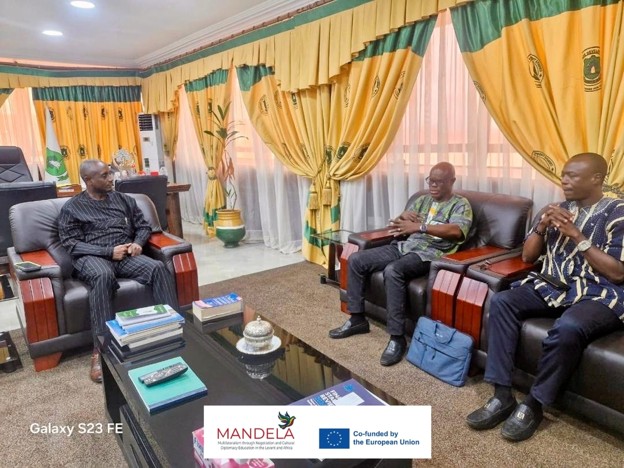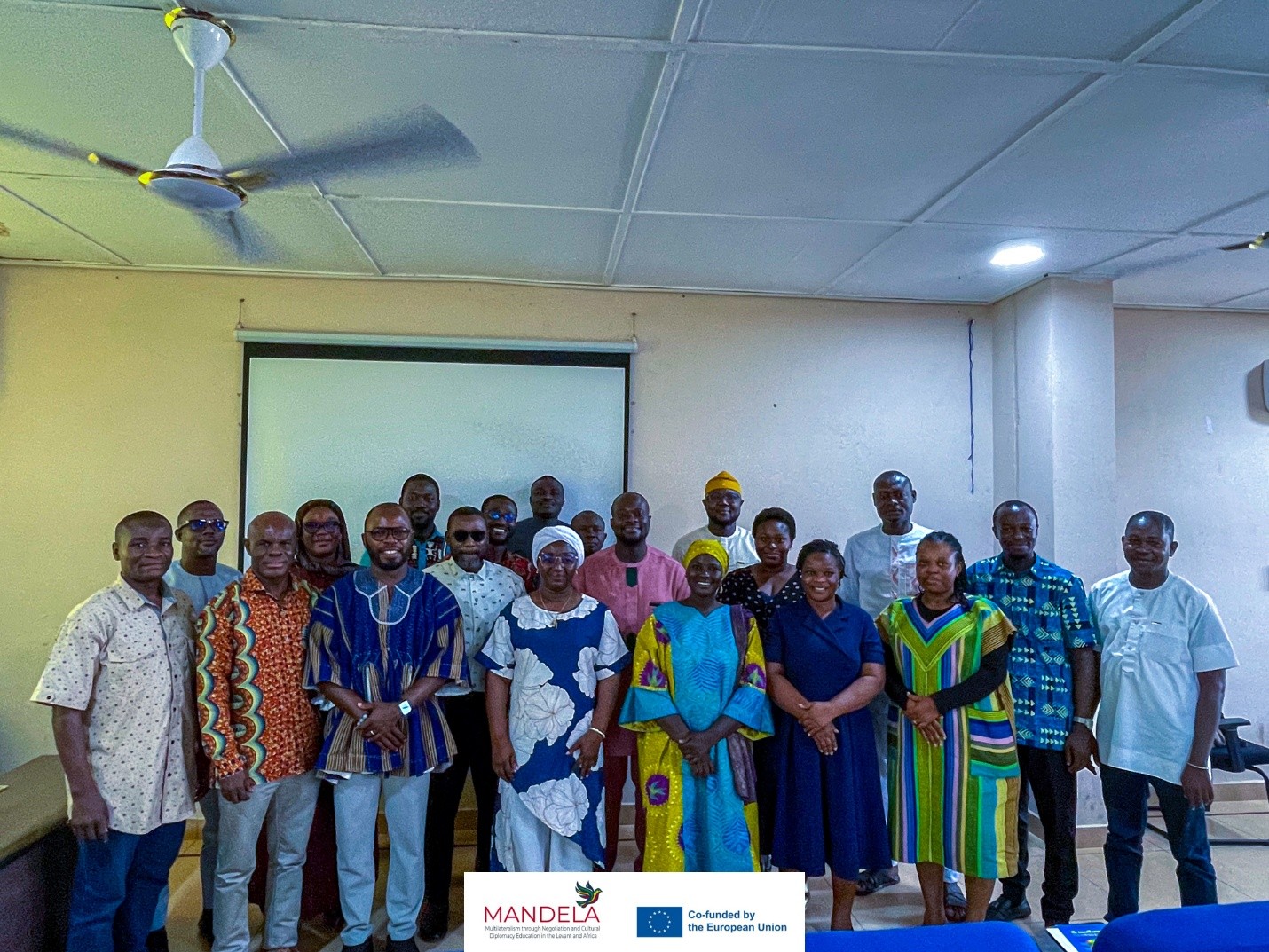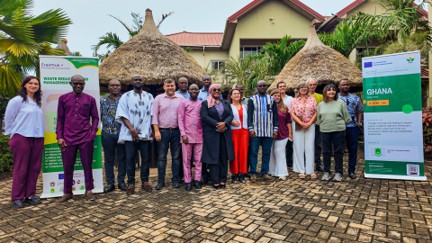
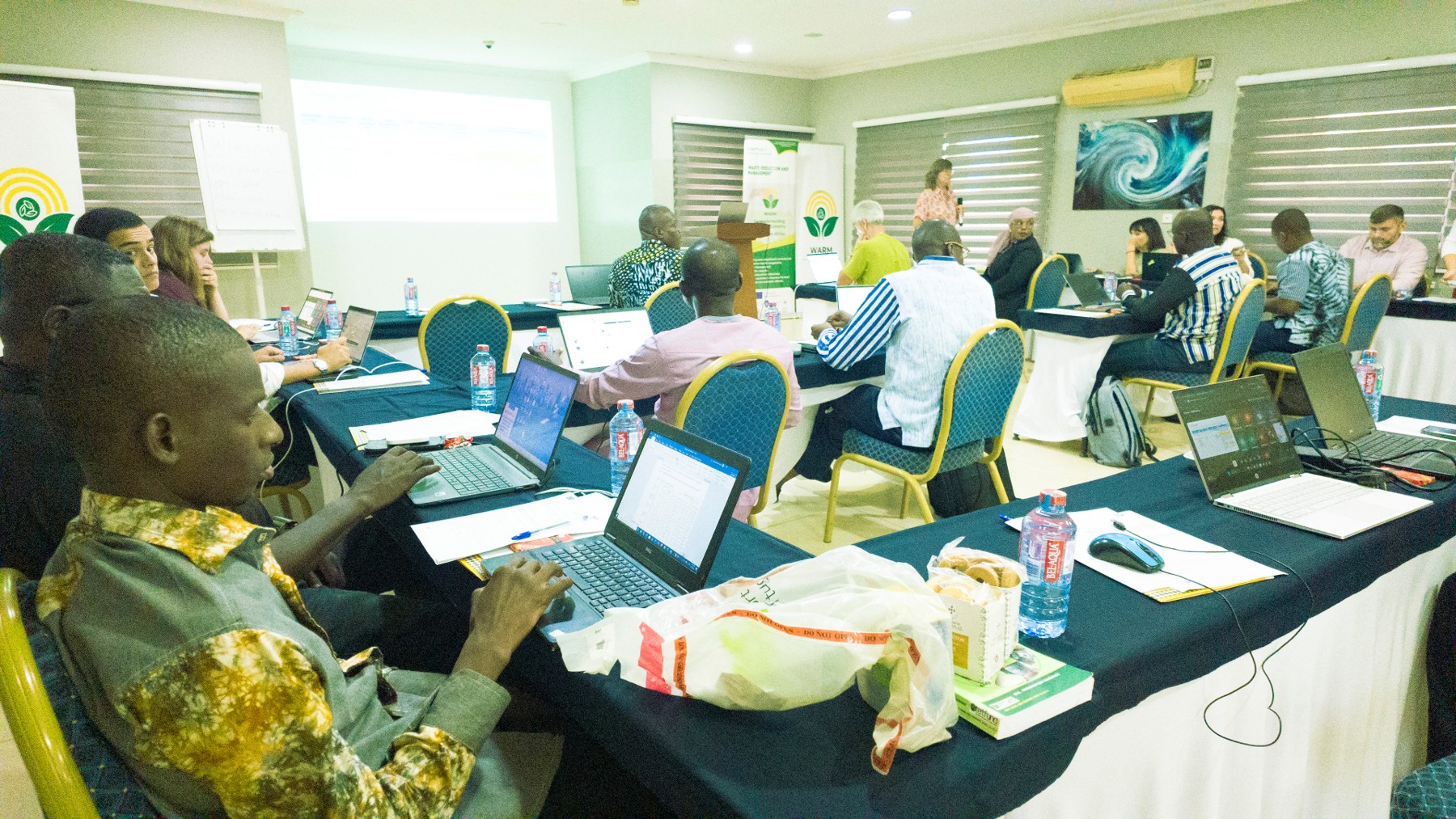
The University for Development Studies (UDS) has hosted a four-day workshop in Tamale where lecturers and researchers from Ghana, Burkina Faso, Sierra Leone, Italy, Portugal and Romania worked together on new master’s programmes to train West Africa’s next generation of waste management experts.
The workshop took place at the Regal Hotel from Monday, 5th October to Thursday, 8th October 2026. It is part of the Waste Reduction and Management by Implementing Circular Economy in Western Africa (WARM) Project, an initiative co-funded by the European Union that supports academic staff in designing and teaching new waste management programmes, with a strong focus on turning waste into useful resources.
The project's idea is simple: Ghana’s growing waste problem cannot be solved without people with the technical skills to manage it.
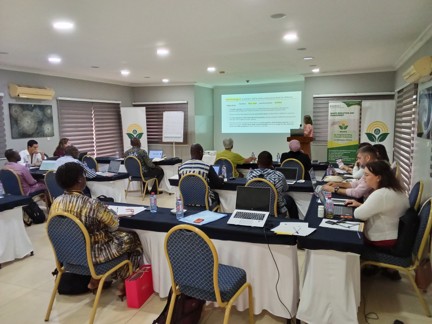
Ten institutions are involved in the project, which is coordinated by Dr. Hilla Limann Technical University (DHLTU). Alongside UDS, the partners include two universities each from Burkina Faso and Sierra Leone, as well as European partners Hilo Impact, the University of Basilicata in Italy, the University of Évora in Portugal and the Technical University of Iași in Romania.
Speaking to journalists on the sidelines of the workshop, the Vice-Chancellor of DHLTU and Project Coordinator, Prof. Hamidatu Darimani, described the project as a response to the mounting waste challenge in Ghana and across sub-Saharan Africa. Lasting solutions, she said, will come from building technical expertise.
She explained that the partners are jointly developing a Master of Science curriculum in waste management that puts practical training and converting waste into resources at its core.
“We believe that if so many people have the technical expertise in handling waste, I think the problem would be solved,” she said.
For UDS, the benefits go beyond a new curriculum. The university’s Principal Investigator on the project, Dr. Abubakari Zarouk Imoro, said WARM would strengthen UDS’s capacity to train competent waste management professionals and open the door to knowledge transfer and experience sharing with partners in Europe and Africa.
He added that the university would receive laboratory equipment bought under the project, giving students more opportunities for hands-on learning.
“African partners will gain knowledge and experience shared from our EU partners. We can also upgrade our laboratories with equipment that is purchased through the project funds,” Dr. Imoro said.
He noted that the expected result is graduates who are more competent and competitive in Ghana and abroad, along with better waste management practices that improve public health and protect the environment.
For Prof. George Barjoveanu, an environmental management expert from the Technical University of Iași, West Africa’s situation feels familiar. Romania, he recalled, was on a similar path about three decades ago, before it began running environmental studies programmes and training its first waste management specialists.
“I really hope that we can transfer that knowledge and that experience here, so you guys have a faster implementation of waste management procedures,” he said.
He was careful to point out, however, that Romania’s approach cannot simply be copied. He stressed that the courses being developed for Ghana, Burkina Faso and Sierra Leone must reflect conditions on the ground.
“Our main objective and mission is to develop training courses for specialists in this field here in West African countries, but we need to do this by adapting teaching materials to the local context and reality,” he explained.
Dr. Noël Gabiliga Thiombiano, a lecturer at the University of Ouahigouya in Burkina Faso, urged the group to look beyond the lecture hall. He argued that training specialists will achieve little if ordinary people do not understand why waste management matters. Since many people still lack a basic understanding of the issue, he believes public education deserves as much attention as classroom teaching.
“It is really important to work on and sensitise our populations and provide opportunities for students to learn about waste management,” Dr. Thiombiano said.
He also said his university is working with project partners to run a master’s programme in environmental science and waste management, aimed at building the skills of students and professionals in the sector.
Participants rounded off the workshop with field visits to the Tamale Metropolitan Waste Department, selected recycling facilities and the Gbalahi landfill site, giving them a first-hand look at how waste is handled in the metropolis.
Through its role in the WARM Project, UDS continues to build strong international partnerships and to deliver practical, problem-solving training that responds to the development needs of northern Ghana and beyond.
Ibrahim Yakubu & Bukari Ayuba
UDS Media
View your student profile, register your courses, etc.
Access learning material on the University's e-Learning platform
Access the University library's resources
Search for and view staff profile